
Weak plant growth is when a plant is growing slower than you’d expect or isn’t growing strong stems, healthy leaves, flowers or fruit. It’s usually an indication that the plant isn’t getting the proper balance of light, water, or nutrients or the right growing conditions.
Healthy growth is necessary for all plants. Flowers bloom more freely, vegetables produce better crops, shrubs put on fuller foliage, and houseplants keep their attractive looks. Strong plants are also more resistant to environmental stress, pests and disease.
Slow plant growth is mostly caused by low sunlight, incorrect watering, nutrient shortages, poor soil, root problems, pests, diseases, temperature stress, or overcrowding. Catching the problem early helps return the tree to healthy growth and prevent long-term damage.
Key Takeaways
- Most of the time poor plant growth is caused by a lack of sun, watering problems, nutrient deficiencies, poor soil, pests, diseases, or problems with the roots.
- Before you apply any treatments, determine the root cause, since similar symptoms can stem from different problems.
- Healthy soil, proper watering and adequate sunlight are the foundation for strong plant growth.
- Nitrogen, phosphorus, and potassium deficiencies can significantly reduce plant vigor, flowering and productivity.
- If you see pests, disease, or root issues early, you prevent long-term damage, and the plant is more likely to recover.
- Once you restore the growing conditions and provide regular care, most plants can bounce back from poor growth.
Table of Contents
What Is Weak Plant Growth?
Weak plant growth is a condition in which a plant grows more slowly than it should and has less vigor than healthy plants of the same type. The plant may appear stunted, underdeveloped, or generally unhealthy, rather than producing strong stems, healthy foliage, flowers or fruit.
Definition of Weak Plant Growth
Weak plant growth is when a plant cannot grow at its normal rate due to unfavorable growing conditions, nutrient imbalances, environmental stress, pests, diseases, or other conditions that limit healthy development.
They have the following common features:
- Sluggish development compared to normal growth rates
- Poor overall performance and reduced vigor
- There is little leaf, stem, flower or fruit production.
Common Signs of Weak Growth
There are several signs that show that a plant is having trouble growing properly:
- Little leaves or small leaves
- Leggy, weak or thin stems
- Less than normal plant length
- Lower bloom count or less flowering
- Poor fruiting and lower crop
- Yellowing, discolored, or pale foliage
- Sparse or patchy growth
These symptoms may occur alone or in combination depending on the cause.
Weak Growth vs Naturally Slow-Growing Plants
Some slow-growing plants are no problem. Some species naturally grow slower than others. For example, many succulents, cacti and some shrubs grow slowly even under the best conditions.
Compare the plant’s current growth to its normal growth habits to see if it is fragile. If a tomato plant stays small throughout the growing season, you may have a problem, but if a jade plant grows slowly, it could just be normal.
Understanding the normal growth rate of your plant is important, as what may look like weak growth for one species might be completely normal for another.
10 Common Causes of Weak Plant Growth
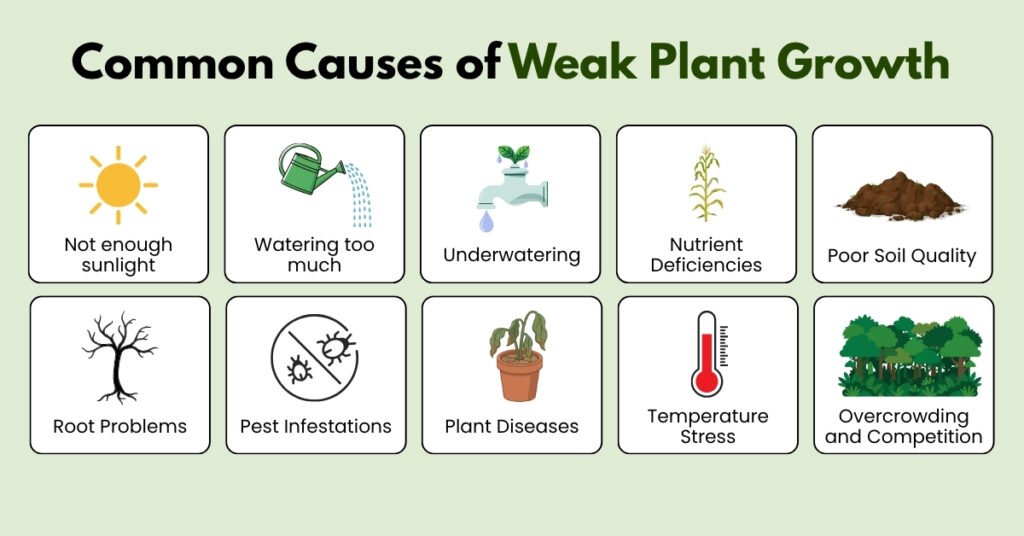
1. Not enough sunlight
One of the most important factors for healthy plant growth is sunlight. As a plant absorbs light, it undergoes photosynthesis, a process that creates energy that helps it grow roots, stems, leaves, flowers, and fruit. When a plant doesn’t receive enough light, its growth slows down significantly because it cannot generate the energy needed to support healthy growth.
How Lack of Light Affects Growth
Insufficient sunlight prevents a plant from making its own food. Hence, the plant spends its limited energy on survival rather than growth. This often leads to weak stems, smaller leaves, less flowering and poor fruit production. Without light for long periods of time, the plants become increasingly unhealthy and vulnerable to pests and disease.
Signs of Low-Light Stress
Watch for these common symptoms:
- Growth retardation or delayed growth
- Long drawn-out stems (leggy growth)
- Small, undersized leaves
- Yellowing or light green leaves
- Decrease in flowering
- Low fruit production
- Thin, weak growth
- Leaning into light
Light Requirements for Different Plant Types
Houseplants: Many indoor plants do well in bright indirect light, or you can go for low-light tolerant varieties like snake plants and ZZ plants that can survive in darker conditions. But even shade-loving plants require some light to grow properly.
Vegetables: Most fruiting vegetables, including tomatoes, peppers, cucumbers, squash and beans, will require a minimum of 6 to 8 hours of direct sun daily for strong growth and high yields.
Flowering Plants: Most annuals and perennials need full sun to produce an abundance of flowers. Too little light usually results in fewer flowers and weaker stems.
How to Fix It
- Bring houseplants near a sunny window.
- Move outdoor plants to a sunnier location, if possible.
- Trim back any nearby trees or shrubs that shade the area too much.
- Turn your indoor plants regularly so they grow evenly.
- Supplement with grow lights in the winter or in dark rooms.
- Research the light requirements for each plant species.
2. Watering too much
One of the most common mistakes in plant care and one of the primary reasons for weak plant growth is overwatering. “Plants need water to survive, but too much can be as detrimental as too little. Too much water stops roots from getting the oxygen they need to work right.
Why too much water hinders growth
Healthy roots absorb water, nutrients and oxygen from the soil. Constant moisture in the soil means less oxygen and stressed roots. This limits nutrient uptake and weakens overall plant growth. Overwatering for an extended period can also cause root rot, a serious condition that damages the root system.
Symptoms of Overwatered Plants
The common signs are:
- Golden Leaves
- Moist soil that is wilting
- Growth is slow or stunted.
- soft stem
- Gentle Roots
- Foliage fall
- leaves with brown dots
- Fungus or mold on surface soil
- Soil odor is awful.
How to Correct Overwatering
- Let the soil dry out before you water it again.
- Test the soil moisture with your finger before watering.
- Add organic matter or use a well-draining potting mix to improve drainage.
- After watering container plants, dump out any drainage trays.
- Use adequate drainage holes in the pots.
- If plants grow less rapidly in the cooler seasons, reduce watering frequency.
A simple rule is to water based on soil moisture, not a schedule.
3. Underwatering
Too much water is as dangerous as too little. Water is vital for nutrient transport, photosynthesis, temperature regulation and the overall health of the plant. Plants that don’t receive enough moisture concentrate on survival, not growth.
How Water Stress Affects Development
Plants that are short of water can’t move nutrients efficiently from the soil to their leaves and growing tips. This reduces photosynthesis and limits the energy available for new growth. Prolonged drought stress can stunt plants and decrease flowering, fruiting and overall vigor.
Signs of Dehydrated Plants
Be alert for these symptoms:
- Dry, cracked ground
- Leaves wilting
- Brown tips or edges on leaves
- Curled leaf
- Early leaf drop
- Leaves small
- Growth is slow.
- Reduced flowering and fruiting
Watering the Right Way
- Water deeply to allow moisture to reach the root zone.
- Let the water soak into the soil instead of running off the surface.
- Monitor the soil moisture closely, particularly during hot weather.
- Water it in the morning early to cut down on evaporation.
- Mulching around outdoor plants helps preserve moisture.
- Watering frequency should be adjusted based on rainfall, temperature and type of plant.
Deep, consistent watering creates stronger root systems and healthier long-term growth than frequent shallow watering.
4. Nutrient Deficiencies
Healthy roots, stems, leaves, flowers and fruits all need a steady supply of nutrients. When essential nutrients are missing, growth slows, foliage turns discolored and overall plant vigor diminishes. Depleted garden soils, containers and plants that have not been fertilized for long periods are especially prone to nutrient deficiencies.
Essential Nutrients Plants Need
The three primary macronutrients are
- Nitrogen (N): promotes leafy growth and lush foliage.
- Phosphorus (P): helps with root development, flowering and fruiting.
- Potassium (K): Contributes to overall plant health, disease resistance and stress tolerance.
Plant growth and development also require trace amounts of micronutrients such as iron, magnesium and calcium.
Nitrogen Deficiency
Nitrogen makes for vigorous leaf and stem growth. Plants often struggle to produce healthy foliage at low nitrogen levels.
Common symptoms include:
- Light green or yellow leaves
- Growth is slow.
- Little Leaves
- Slender stems
- Reduced overall vitality
Plants translocate available nitrogen to new growth, so the oldest leaves are usually the first to show symptoms.
Phosphorus Deficiency
Phosphorus is essential for root growth and for energy transfer in the plant.
Common symptoms include:
- Slow or stunted growth
- Poor root development
- Reduced flowering
- Smaller fruits
- Dark green or purplish foliage in some plants
Young plants are particularly sensitive to a lack of phosphorus.
Potassium Deficiency
Potassium helps control the movement of water and nutrients and keeps plants healthy.
Typical symptoms are:
- Edges of leaves yellowing
- Brown or burnt leaf edges
- Delicate stem
- bad flowering
- Fruit quality is lower.
- Greater vulnerability to stress and disease
Micronutrient Deficiencies
Micronutrients are needed in small amounts but are important for healthy growth.
Iron
Iron deficiency usually leads to:
- Yellow leaves with green streaks
- Growth is slow.
- New light leaves.
This deficiency is a common problem in alkaline soils, where iron is less available for the plant.
Magnesium
Magnesium is needed to make chlorophyll.
Symptoms include:
- Yellow between the leaf veins.
- Less rapid growth
- Premature leaf fall
The older leaves are usually affected first.
Calcium
Calcium helps build strong cells and structure in plants.
Deficiency symptoms include:
- New growth is deformed.
- Weak stems
- Burning of leaf tips
- Tomatoes and peppers with blossom end rot
How to Rebalance Nutrients
- Use a balanced fertilizer if the nutrient levels are unknown.
- Add compost to help make nutrients available.
- Correct specific deficiencies with specific fertilizers.
- Maintain the proper soil pH for improved nutrient uptake.
- Be sure to follow fertilizer recommendations closely so you don’t overfeed.
5. Poor Soil Quality
Poor soil can limit plants even when there is ample sunlight and water. Healthy soil supplies nutrients, moisture, oxygen and physical support for roots. Plant growth often suffers when soil quality decreases.
Compacted Soil
Compact soil limits root growth and decreases aeration in the root zone.
Common causes include:
- High foot traffic
- Construction work
- Heavy machinery used often
- Soils in the Wet
Plants growing in compacted soil are often smaller than expected and have difficulty obtaining water and nutrients.
Poor Drainage
Wet soil can smother roots and promote root diseases.
Signs of poor drainage include:
- Rainwater standing still
- Constant wet soil
- Leaves turn yellow.
- Growth is low.
- Issues with root rot
Low Organic Matter
Organic matter improves soil structure and water and nutrient-holding capacity.
Soils low in organic matter usually:
- Quick drying
- Fewer nutrients
- Helping weaker root systems
- Slow down the growth of plants.
Bad soil structure
Different plants thrive in different types of soil. Soils that are very sandy can drain too quickly; heavy clay soils can hold too much moisture.
If the soil structure isn’t right, plants might find it difficult to develop healthy roots and absorb nutrients properly.
How to Boost Soil Health
- Add compost yearly.
- Add well-decomposed organic matter.
- Keep the soil undisturbed.
- Mulch around plants to protect the soil structure.
- Increase drainage in areas of poor drainage.
- Conduct a soil test to determine nutrient or pH deficiencies.
With healthy soil, you generally produce healthier plants without having to make drastic changes to how you water or fertilize.
6. Root Problems
Roots absorb water, nutrients and oxygen from the soil. If the root systems are damaged or unhealthy, the above-ground growth will generally deteriorate quickly. Poor plant growth generally starts below the soil surface, often well in advance of any visible symptoms.
Root Bound Plants
Container plants can become root bound as the roots grow out of the pot and begin to circle the root ball.
Symptoms include:
- Low growth
- Frequent Drooping
- Little leaves
- Poor Water Uptake
- Little new growth
Root-bound plants can often benefit from repotting into a larger container.
Damaged Roots
Roots may be injured by:
- Transplant shock
- Working around plants
- Soil compacting
- Pest activity
- Over-cultivation
Damaged roots are not effective at taking up water and nutrients, and this condition causes the plant to grow slowly.
Root Rot
Root rot usually occurs when the roots remain too wet for an extended period.
Symptoms include:
- Wilting even if the soil is wet
- Yellow leaves
- Slow-growth
- Soft dark roots
- reduced plant health
If not treated, root rot can eventually kill the plant.
How Root Health Impacts Growth
A healthy root system supports all aspects of plant development. Plants often experience when roots can’t function correctly:
- Nutritional deficiencies
- Water scarcity
- Less energy
- Growth Stunted
- No flowering and fruiting
Strong roots make strong plants.
Solutions for Root Issues
- Are your container plants rootbound? Repot.
- Enhance soil drainage.
- Don’t overwater.
- Reduce root disturbances when transplanting.
- When repotting, remove any badly rotted roots.
- Take care of the soil so that the roots can develop.
7. Pest Infestations
Many garden and houseplant pests suck fluid from the plant’s leaves, stems, or roots. Even minor infestations can sap plants’ strength over time, diminishing their ability to grow and produce healthy foliage, flowers, or fruits.
Common Pests That Cause Stunted Growth
Aphids
Aphids are small, soft-bodied insects that feed on the sap of plants.
Damage includes:
- Distorted growth
- Curled Leaf
- Yellowing leaves
- Reduced vigor
Spider Mites
Spider mites are tiny pests that prefer warm, dry weather.
Symptoms include:
- Leaves mottled
- Fine webbing.
- Leaves lose color.
- Moderate Growth
Whiteflies
Whiteflies feed on the plant juices and cluster on the undersides of leaves.
Common signs include:
- Turning yellow leaves
- Sticky honeydew residues
- Slower Growth
- Premature leaf fall
Thrips
Thrips feed on plant cells by scraping and sucking the plant tissue.
Symptoms include:
- Silver leaf streaks
- New growth spiraled.
- Flowers damaged
- Weakening of plant vigor
Scale Insects
Scale insects have a waxy coating and attach to stems and leaves, feeding constantly on plant sap.
Signs include:
- Sticky residue
- Yellow leaves
- Weak growth
- Declining plant health
How to Identify Pest Damage
Look for:
- Insects visible on leaves or stems
- Sticky honeydew goop
- Damaged or holes in leaves
- Leaves turning colors
- Growth broken
- Masses of webbing or cotton-like stuff
- Rapid decline in plant vigor
Regular inspections can help you detect an infestation before it becomes a serious problem.
Treatment Options
- Where possible, remove heavily infested leaves.
- Knock pests off plants by spraying them with a jet of water.
- Spray with insecticidal soap or horticultural oil.
- Attract helpful insects like ladybugs and lacewings.
- Proper plant care increases natural resistance.
- Control infestations early before populations explode.
Healthy, unstressed plants tend to better tolerate minor pest pressure than plants that are already compromised by other growing problems.
8. Plant Diseases
Plant diseases can considerably inhibit growth by interfering with normal plant functions. Diseases can be caused by fungi, bacteria, or viruses, and they can disrupt a plant’s ability to absorb nutrients, transport water, and create energy through photosynthesis. As a consequence, plants affected by this disorder may grow slowly, produce fewer leaves, and bear fewer flowers or fruits.
Fungal Diseases
Fungal diseases are one of the most common causes of poor plant performance. They often thrive in humid conditions, crowded plantings, and overly wet soil.
Common fungal diseases include:
- Powdery mildew
- Root rot
- Leaf spot diseases
- Downy mildew
- Rust diseases
Typical symptoms:
- White, grey or powdery coverings
- Brown or black spots on leaves.
- Yellowing foliage
- Wilting
- Slower growth
Bacterial Diseases
Water, contaminated tools, insects or plant wounds can spread bacterial infections.
Common symptoms include:
- Water-soaked spots on leaves
- Leaf blight
- Stem cankers
- Wilting despite adequate moisture
- Blackened plant tissue
Bacterial diseases can be difficult to control when they become serious.
Viral Infections
Pests such as aphids, whiteflies, and leafhoppers frequently spread plant viruses.
Common symptoms include:
- Mottled or mosaic leaf patterns
- Distorted leaves
- Stunted growth
- Reduced flowering
- Poor fruit production
Unlike fungal or bacterial diseases, viral infections usually cannot be cured once a plant becomes infected.
How Diseases Reduce Plant Vigor
Diseases affect essential plant processes and often cause:
- Slower growth
- Reduced photosynthesis
- Poor nutrient uptake
- Premature leaf drop
- Weak stems
- Lower flower and fruit production
Over time, infected plants become less productive and more vulnerable to environmental stress.
Prevention and Control
- Water plants at the soil level whenever possible.
- Improve air circulation around plants.
- Avoid overcrowding.
- Remove infected leaves and plant debris promptly.
- Disinfect pruning tools between plants.
- Grow disease-resistant varieties when available.
- Control insect pests that spread diseases.
- Avoid overwatering and poor drainage conditions.
Preventive care is often far more effective than treating diseases after they become established.
9. Temperature Stress
Plants grow best within specific temperature ranges. When temperatures become too hot, too cold, or fluctuate dramatically, plants may slow their growth to conserve energy and protect themselves from damage.
Heat Stress
Too much heat can interfere with the process of photosynthesis and increase water loss through transpiration.
Common symptoms include:
- Wilting
- Leaf scorch
- Brown leaf edges
- Flower drop
- Reduced fruit set
- Slow growth
Heat stress is particularly common during summer heat waves and prolonged drought conditions.
Cold Stress
Temperatures below a plant’s preferred range can slow metabolic processes and limit growth.
Symptoms may include:
- Stunted growth
- Leaf discoloration
- Drooping foliage
- Delayed flowering
- Frost damage
Warm-season plants such as tomatoes, peppers, and cucumbers are especially sensitive to cold temperatures.
Sudden Temperature Fluctuations
Rapid changes between day and night temperatures can stress plants and disrupt normal growth patterns.
This may result in:
- Leaf drop
- Flower drop
- Reduced vigor
- Slower development
- Increased susceptibility to diseases
Plants generally perform better when temperatures remain relatively stable.
Ideal Temperature Ranges for Plant Growth
While exact requirements vary by species, most garden and houseplants grow best within moderate temperature ranges.
| Plant Type | Preferred Temperature Range |
|---|---|
| Houseplants | 65°F–80°F (18°C–27°C) |
| Warm-Season Vegetables | 70°F–85°F (21°C–29°C) |
| Cool-Season Vegetables | 55°F–75°F (13°C–24°C) |
| Flowering Annuals | 60°F–80°F (16°C–27°C) |
Choosing plants suited to your climate is one of the easiest ways to minimize temperature-related growth problems.
10. Overcrowding and Competition
Plants need enough room to get sun, water, nutrients, and air. Too many plants growing in the same area will compete for these resources, which often results in weak or stunted growth.
Competition for Light
In crowded plantings, taller plants can block sunlight from reaching shorter plants.
This often causes:
- Leggy growth
- Weak stems
- Smaller leaves
- Reduced flowering
- Uneven plant development
Light competition is especially common in densely planted flower beds and vegetable gardens.
Competition for Water
When multiple plants share a limited root zone, available moisture is depleted more quickly.
As competition increases, plants may experience:
- Wilting
- Slow growth
- Reduced vigor
- Increased drought stress
Shallow-rooted plants are often affected first.
Competition for Nutrients
Overcrowded plants must share the same nutrient supply.
This can lead to:
- Nutrient deficiencies
- Yellowing leaves
- Poor flowering
- Reduced fruit production
- Smaller plant size
Heavy-feeding plants such as tomatoes, squash, and many flowering annuals are particularly sensitive to nutrient competition.
Proper Plant Spacing Guidelines
Providing adequate spacing helps ensure plants receive sufficient resources throughout the growing season.
General recommendations include:
- Follow spacing guidelines listed on plant tags or seed packets.
- Thin seedlings promptly after germination.
- Allow room for mature plant size rather than current size.
- Prune overcrowded branches when necessary.
- Avoid packing containers with too many plants.
Proper spacing allows for better airflow, lessens disease pressure, and results in stronger roots, healthier foliage, and more vigorous growth.
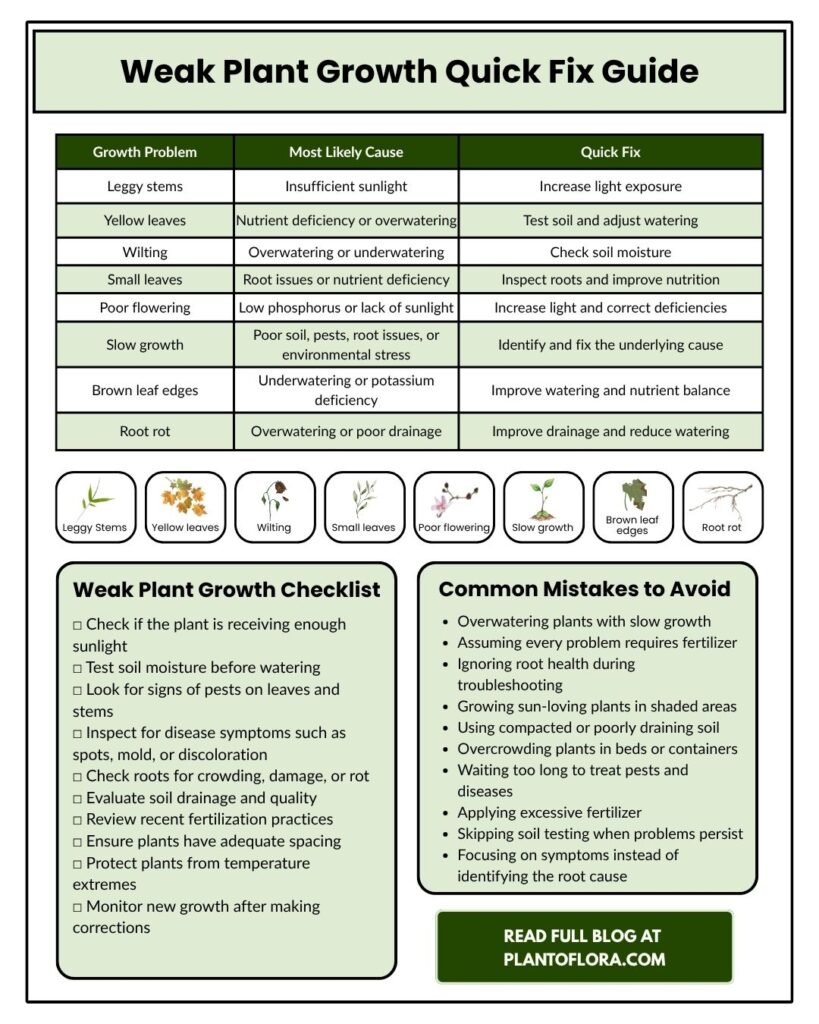
Weak Plant Growth Troubleshooting Table
The table below can help you quickly identify common symptoms of weak plant growth, determine the most likely cause, and take corrective action.
| Symptom | Likely Cause | Recommended Solution |
|---|---|---|
| Yellow leaves | Nutrient deficiency, overwatering, or poor drainage | Test soil, apply appropriate fertilizer, and improve drainage if needed |
| Leggy growth | Lack of sunlight | Move the plant to a brighter location or provide supplemental grow lights |
| Wilting | Overwatering or underwatering | Check soil moisture and adjust watering practices accordingly |
| Small leaves | Root problems, nutrient deficiency, or insufficient light | Inspect roots, improve soil conditions, and ensure adequate sunlight |
| Pale foliage | Nitrogen or iron deficiency | Apply the appropriate fertilizer and check soil pH |
| Brown leaf edges | Underwatering, heat stress, or potassium deficiency | Increase watering consistency and correct nutrient imbalances |
| Slow growth | Poor soil, low light, nutrient deficiencies, or root issues | Evaluate growing conditions and address the underlying problem |
| Reduced flowering | Low phosphorus levels or insufficient sunlight | Increase light exposure and use a phosphorus-rich fertilizer if needed |
| Poor fruit production | Nutrient deficiencies, inadequate sunlight, or temperature stress | Improve nutrition, provide sufficient sunlight, and protect plants from extreme temperatures |
| Leaf drop | Water stress, temperature fluctuations, pests, or diseases | Identify the cause and correct environmental or health issues |
| Soft, yellowing leaves | Overwatering or root rot | Reduce watering and inspect roots for signs of rot |
| Stunted growth | Compacted soil, overcrowding, pests, or diseases | Improve soil conditions, provide proper spacing, and manage pests or diseases promptly |
Using symptoms alone may not always reveal the exact problem, as several issues can produce similar signs. For the most accurate diagnosis, evaluate light, watering, soil quality, nutrients, root health, pests, and environmental conditions together.
Frequently Asked Questions
Why is my plant growing slowly but looks healthy?
A plant may grow slowly but still look healthy if it is naturally slow-growing, dormant, or receiving less-than-ideal light, temperature, or nutrients. Compare its growth to the typical growth rate of its species before assuming there is a problem.
Can weak plant growth recover?
Yes, most plants can recover from weak growth once the underlying cause is corrected. Improving sunlight, watering, soil conditions, nutrition, or pest control often helps restore healthy growth.
What nutrient deficiency causes stunted growth?
Nitrogen deficiency is the most common cause of stunted growth because it affects leaf and stem development. Phosphorus and potassium deficiencies can also slow growth and reduce overall plant vigor.
How long does it take for a plant to recover?
Recovery time depends on the cause. Minor issues may improve within a few weeks, while plants recovering from severe stress, root damage, or disease may take several months to regain healthy growth.
Does repotting help weak plants?
Repotting can help if a plant is root bound, growing in poor soil, or suffering from drainage problems. Fresh soil and additional root space often encourage stronger growth.
Can too much fertilizer cause weak growth?
Yes. Excess fertilizer can burn roots, create nutrient imbalances, and slow plant growth. Signs of overfertilization include brown leaf tips, yellow leaves, and fertilizer salt buildup on the soil surface.