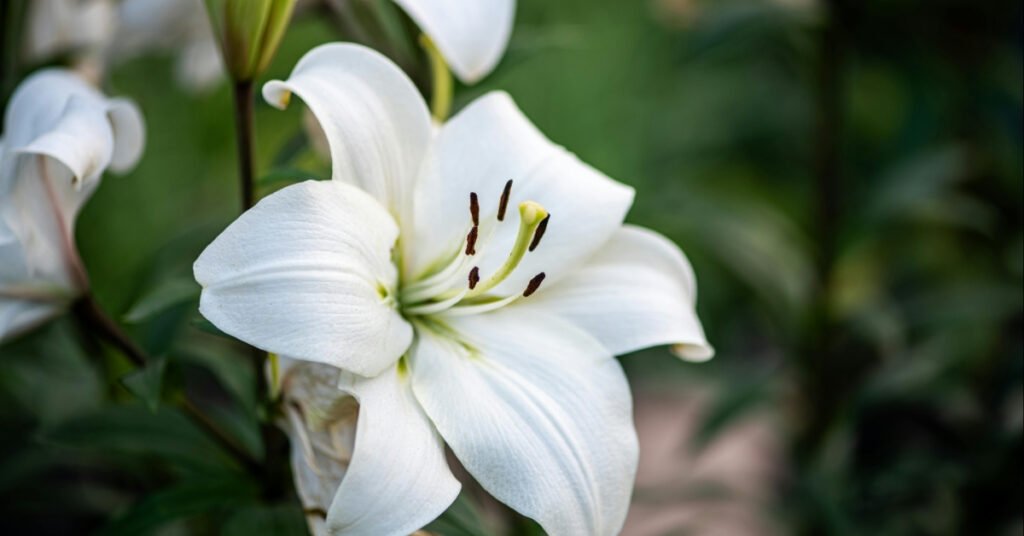
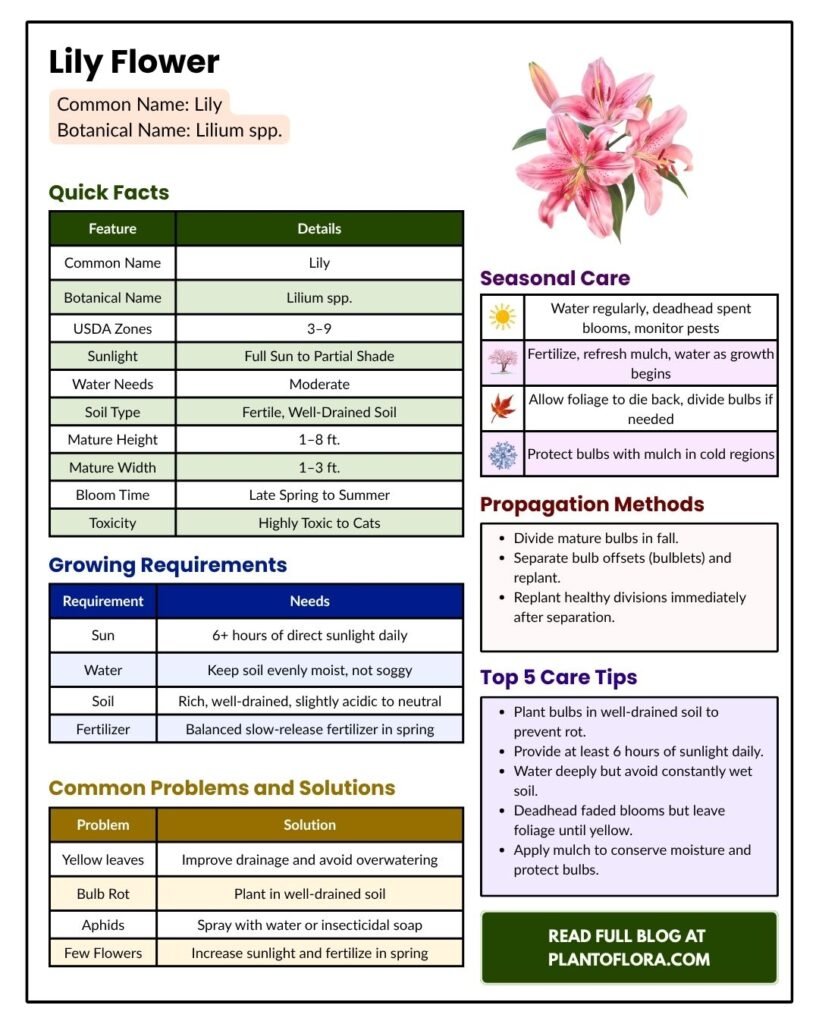
Lily Flower Quick Facts
| Feature | Details |
|---|---|
| Common Name | Lily, True Lily |
| Botanical Name | Lilium spp. |
| Family | Liliaceae |
| Plant Type | Bulbous perennial flowering plant |
| Life Cycle | Perennial |
| USDA Zones | 3–9 (varies slightly by species and cultivar) |
| Mature Size | 1–8 ft. tall × 1–3 ft. wide |
| Sun Requirements | Full sun to partial shade (6+ hours of sunlight preferred) |
| Soil Requirements | Rich, well-drained, slightly acidic to neutral soil |
| Water Needs | Moderate; prefers consistently moist but not waterlogged soil |
| Bloom Time | Late spring through summer, depending on variety |
| Flower Color | White, pink, red, orange, yellow, purple, burgundy, and bi-colors |
| Benefits | Attractive blooms, excellent cut flowers, pollinator-friendly, long-lived perennial |
| Landscaping Uses | Borders, cottage gardens, mixed beds, cutting gardens, foundation plantings, containers |
| Toxicity | Highly toxic to cats; may cause mild digestive upset in dogs if ingested |
| Special Features | Large fragrant flowers, striking colors, excellent vase life, attracts pollinators |
| Resilience | Cold-hardy, deer-resistant in some areas, drought-tolerant once established (variety dependent) |
Key Takeaways
- Lily flowers are perennial bulbs that come back every year and produce large, showy blooms in various colors.
- To grow healthy, prolific flowering lilies, plant lily bulbs in full sun to partial shade and well-drained soil.
- Most lilies bloom from late spring through summer, with bloom time depending on species and cultivar.
- Water lilies need regular watering, but avoid soggy soil, as too much moisture can cause bulb and root rot.
- Dividing bulbs in the fall provides an easy way for gardeners to propagate lilies and make new plants from existing clumps.
- True lilies (Lilium spp.) are very toxic to cats, so they should be planted with caution in pet-friendly gardens.
Table of Contents
Lily Flower Overview
Lilium spp. are perennial bulb plants with large colorful blooms and a graceful appearance. True lilies belong to the Liliaceae family and come back each year from bulbs planted in the ground, providing a dependable and durable display in the garden.
Lilies are recognized by their upright stems, narrow leaves and eye-catching flowers that can be found in white, pink, yellow, orange, red and purple. Many types are also quite fragrant, including Oriental lilies. Plants can be anywhere from 1 to 8 feet tall, depending on the type of plant and flower, from late spring to summer.
Lilies are indigenous to parts of Europe, Asia and North America, growing naturally in well-drained soils in sunny to lightly shaded spots. For centuries, they have become one of the most widely grown ornamental flowers in the world.
For centuries, these flowers have symbolized purity, beauty, and renewal, and people commonly use them in gardens, floral arrangements, and special occasions. Some lilies are not fragrant. Oriental lilies are fragrant. Asiatic lilies are bright.
Lilies are gardener favorites for their dramatic flowers, their adaptability to borders and cutting gardens, their appeal to pollinators, and their reappearance year after year with little upkeep.
Types and Varieties of Lily Flowers
There are thousands of cultivars of lilies with a wide range of flower colors, sizes, fragrances and bloom times. The following types are some of the best for home gardens because they are readily available, simple to grow, and provide outstanding ornamental value.
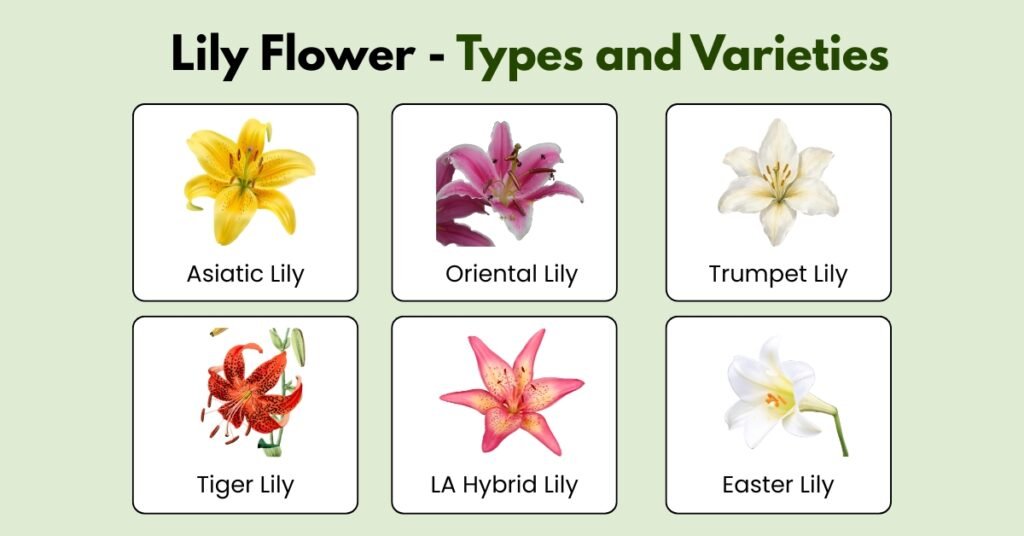
Asiatic Lily (Lilium Asiatic Hybrids)
Asian lilies are one of the easiest and most reliable for beginners. They produce bright flowers in many colors early in the season.
- Early summer flowers help prolong the flowering season.
- Extremely cold-hardy and low-maintenance.
- It comes in white, yellow, orange, pink, red and bicolor.
Oriental Lily (Lilium Oriental Hybrids)
Oriental lilies are renowned for their large, very fragrant flowers and dramatic presence in the garden.
- They produce some of the most fragrant lily blooms.
- Flowers are usually larger than those of the Asiatic lily.
- Great for patios, borders and cut flower gardens.
Trumpet Lily (Lilium Trumpet Hybrids)
Trumpet lilies have long trumpet-shaped flowers that add elegance and height to the landscape.
- Large flowers with a strong sweet scent.
- Tall stems are a dramatic focal point in garden beds.
- Thrives in sunny locations with well-drained soil.
Tiger Lily (Lilium lancifolium)
The tiger lily is a garden favorite classic with its unique spotted orange blooms.
- The unique flowers of the tiger lily face downward and have dark spots.
- Mature stems produce multiple flowers.
- Once established, it tolerates a range of conditions.
LA Hybrid Lily (Lilium Longiflorum-Asiatic Hybrids)
LA hybrids combine the bright colors of Asiatic lilies and the larger flowers of Easter lilies.
- Large, upward-facing blooms with great color intensity.
- They make ideal cut flowers due to their strong stems.
- Reliable in the home garden, easy to grow.
Easter Lily (Lilium longiflorum)
Easter lily is most recognized for its white trumpet flowers and is a classic for gardens and containers.
- Elegant white flowers with a lovely fragrance.
- Popular for spring displays & flower arrangements.
- Ideal for garden beds, borders and large containers.
Lily Flower Identification
Lily flowers are easy to recognize by their upright stems, narrow leaves, and large trumpet, bowl, or star-shaped blooms. They grow from underground bulbs and produce striking flowers that make them a standout feature in gardens and landscapes.
| Feature | Description |
|---|---|
| Leaves | Narrow, lance-shaped leaves arranged alternately or in whorls along the stem; medium to dark green in color. |
| Flowers | Large, showy blooms with six petal-like tepals; available in many colors including white, pink, yellow, orange, red, and purple. Flowers may face upward, outward, or downward depending on the variety. |
| Stems | Strong, upright, unbranched stems that emerge from bulbs and support one or multiple flowers. |
| Roots/Bulbs | Grows from a scaly underground bulb that stores nutrients and produces roots annually. |
| Growth Habit | Upright, clump-forming perennial with a vertical growth pattern. |
| Mature Appearance | Reaches 1–8 feet tall with slender stems topped by large, colorful flowers that create a bold focal point in the garden. |
Planting Lily Flowers
Proper planting is the key to healthy lilies and abundant blooms. Lily bulbs establish quickly when planted in well-drained soil and the right location, rewarding gardeners with beautiful flowers year after year.
When to Plant
Plant lily bulbs in fall or early spring when the soil is workable. Fall planting gives bulbs time to establish roots before winter, while spring planting still produces blooms during the growing season.
Where to Plant
Choose a location that receives at least 6 hours of sunlight daily. Lilies grow best in fertile, well-drained soil and do not tolerate waterlogged conditions. In hotter climates, light afternoon shade can help protect flowers from excessive heat.
How to Plant
- Loosen the soil and mix in compost or well-rotted organic matter.
- Dig a hole about 4–6 inches deep, depending on bulb size.
- Place the bulb with the pointed end facing upward.
- Space bulbs 8–12 inches apart to allow good air circulation.
- Cover with soil and water thoroughly after planting.
- Apply a light layer of mulch to help retain moisture and regulate soil temperature.
Once established, lily bulbs typically return each year with larger and more impressive flower displays.
Growing Requirements for Lily Flowers
With proper growing conditions, you can encourage lilies to produce strong stems, healthy foliage and lots of flowers. Many varieties of lilies exist, and most are relatively easy to grow if you meet their basic needs. They make a wonderful plant for the novice as well as the experienced gardener.
Sunlight
Lilies prefer full sun or partial shade and need at least 6 hours of direct sunlight daily. More sun generally leads to stronger stems and better flowering.
A light afternoon shade can help reduce flower fading and heat stress in hot summer areas, especially in the southern U.S. and Australia. But too much shade often means fewer blooms and weaker growth.
Soil
Plant the lilies in fertile, well-drained soil rich in organic matter. They like soil that is a bit acid to neutral, with a pH of 6.0 to 7.0.
Lily bulbs rot easily in soil that is constantly wet, so good drainage is a must. If you have heavy clay soil, add compost, aged manure or other organic material to improve drainage before planting.
Water
Lilies require regular watering, especially during spring growth and flowering. Water thoroughly when the top 1 inch of soil is dry.
Don’t overwater; the bulbs can rot in soggy soil, and fungal diseases can develop. Mulching the plants helps conserve soil moisture and reduce temperature fluctuations during the summer.
Temperature and Humidity
Most lilies grow best in temperatures between 60°F and 80°F (15°C to 27°C). They do best in locations with warm days and cool nights.
Many varieties are very cold hardy and will survive freezing winters when planted in the right USDA zones. Lilies do well with average outdoor humidity levels, as long as there is good air circulation around the foliage.
Nutrition
Lilies are moderate feeders, and a balanced slow-release fertilizer in early spring as new shoots appear is beneficial. Provides nutrients for healthy foliage and flower development all season long.
Adding a layer of compost each year can help improve the fertility of the soil and promote long-term plant health. Avoid high-nitrogen fertilizers, which can promote too much leaf growth at the expense of flowering performance.
Lily Flower Care
Lilies are relatively low-maintenance plants once established, but the right care can have a giant impact on flower size, the number of blooms, and the overall health of the plant. Bulbs need moisture, nutrition and maintenance throughout the seasons to build up energy for stronger growth and flowering in years to come.
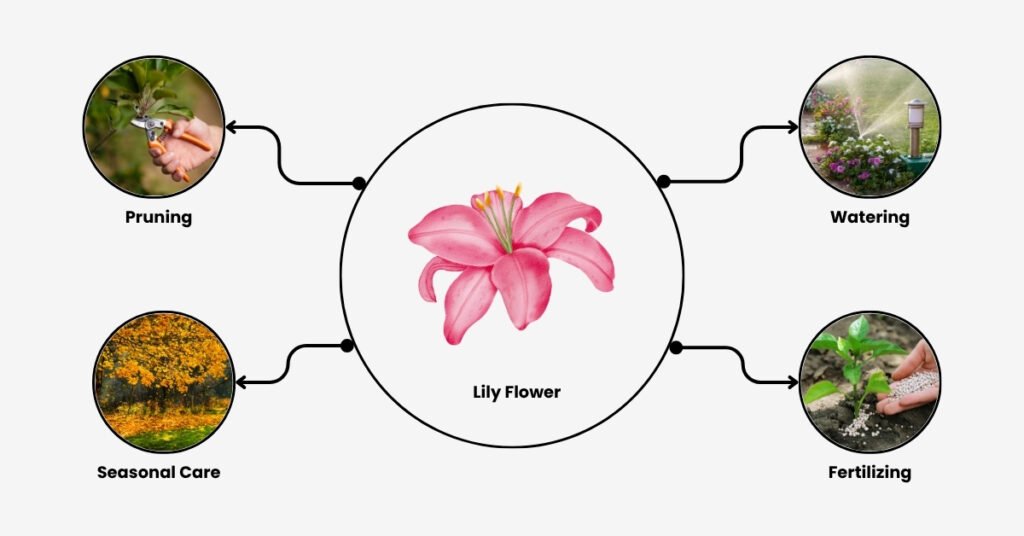
Watering
Water lilies well when the top 1-2 inches of soil dries out. Deep watering encourages roots to grow down further into the soil and makes plants better able to withstand short periods of drought.
Lilies like to have a consistent supply of moisture during active growth and flowering, especially during hot summer weather. Water at the base of the plant wherever possible; wet foliage can increase the risk of fungal diseases. After flowering, when the foliage begins to die back naturally, cut back watering.
Fertilizing
Balanced slow-release fertilizer can be applied when new shoots appear in early spring. This provides the necessary nutrients for healthy stems and foliage, as well as flower production.
A second light feed after blooming can help replenish bulb reserves for next year’s flowers, particularly in poor soils. Each spring, adding compost or well-rotted organic matter around your plants can help improve the soil structure and provide a steady source of nutrients.
Mulching
Apply organic mulch, such as shredded bark, compost, or leaf mold, to a depth of 2–3 inches around the plants. Mulch helps keep moisture in, weeds down and root zones cooler in the summer.
In cooler climates, mulch also provides winter insulation, protecting bulbs from repeated cycles of freezing and thawing that can damage roots.
Pruning
Lilies need very little pruning during the growing season. Remove damaged, yellow or diseased leaves to improve appearance and ventilation.
Don’t prune healthy green stems after flowering. The leaves continue to photosynthesize, providing nutrients to the bulb so it can store nutrients for next year’s growth.
Deadheading
Remove spent blossoms when blooming is finished. Deadheading prevents the plant from wasting energy on seed production, so it can concentrate on developing the bulb.
When deadheading, remove just the spent flower head, leaving as much of the stem and foliage as possible intact.
Companion Plants
Sometimes, during the season, the lower parts of lily stems can look bare. Companion plants can hide the stems and make the garden appear fuller.
Some beneficial companion plants include:
- Coneflower (Echinacea)
- Salvia
- Shasta Daisy
- Black-Eyed Susan
- Lavender
- Catmint (Nepeta)
- Coreopsis
- Hosta
- Coral Bells (Heuchera)
These plants complement lilies while attracting pollinators and extending seasonal interest in the garden.
Seasonal Care
| Season | Care Tasks |
|---|---|
| Spring | Remove winter mulch, inspect bulbs for new growth, apply fertilizer, refresh mulch, and stake tall varieties before flower buds develop. |
| Summer | Water during dry periods, deadhead faded blooms, monitor for aphids and lily beetles, and provide support for tall stems exposed to wind. |
| Fall | Allow foliage to yellow naturally, cut back dead stems, divide overcrowded bulbs every few years, and amend soil with compost if needed. |
| Winter | Leave bulbs dormant in the ground, maintain a protective mulch layer in cold regions, and avoid excessively wet soil around dormant bulbs. |
With proper care, healthy lily bulbs often multiply over time and can provide beautiful blooms for many years without requiring frequent replacement.
Lily Flower Propagation
The most common method of propagation is to divide mature bulbs. This method is easy and reliable and produces new plants that are identical to the parent plant. Dividing bulbs is a wonderful way to expand your garden or refresh overcrowded clumps. Healthy bulbs will spread underground over time.
Division
The best time to divide lily bulbs is in the fall, after the foliage has naturally turned yellow and died back. The bulbs now have enough energy stored to last them through the next growing season.
- Carefully dig around the plant and lift the clump of bulbs from the soil.
- Gently remove the small offset bulbs (bulblets) from the mother bulb.
- Remove any bulbs that are soft, damaged or diseased.
- Please replant healthy bulbs promptly, ensuring they are at the correct depth and spacing.
- Plant in well-drained soil and water thoroughly after planting to establish roots.
Most divided bulbs will root quickly and can flower within one to two growing seasons depending on size.
Blooming Details
| Feature | Details |
|---|---|
| Bloom Season | Late spring to late summer, depending on variety |
| Bloom Duration | Individual flowers last about 1–2 weeks |
| Overall Flowering Period | Typically, 2–4 weeks per plant |
| Flower Size | Usually 3–10 inches across, depending on variety |
| Fragrance | Varies by type; Oriental and Trumpet lilies are highly fragrant, while Asiatic lilies are usually lightly scented or fragrance-free |
| Reblooming | Most lilies bloom once per year |
| Time to First Bloom After Division | Usually 1–2 years for small offsets; larger bulbs may bloom the following season |
Harvesting
Lilies are valued as cut flowers for their large flowers and long vase life.
- Pick flowers as soon as the first bud is showing color or partially opened.
- Cut stems with clean, sharp pruners in the early morning.
- Leave at least a third of the stem and most of the leaves on the plant to allow the bulb to continue to store energy.
- If using flowers indoors, remove pollen-bearing anthers to reduce staining and prolong bloom life.
Regularly changing the water can often keep fresh-cut lilies beautiful in a vase for 7 to 14 days.
Pros and Cons of Lily Flowers
| Pros | Cons |
|---|---|
| Large, showy blooms that add dramatic color and elegance to gardens. | Highly toxic to cats, even in small amounts. |
| Returns every year from bulbs, providing long-term value as a perennial. | Bulbs can rot in poorly drained or waterlogged soil. |
| Available in many colors, sizes, and flower forms, making them suitable for various garden styles. | Bloom period is relatively short compared to some long-flowering perennials. |
| Excellent cut flowers with long vase life and attractive blooms. | Tall varieties may require staking in windy locations. |
| Easy to grow and maintain when planted in the right conditions. | Can be affected by pests and diseases, such as aphids, lily beetles, and fungal infections. |
Lily Flower Problems and Toxicity
While lilies are typically easy to grow, they can occasionally fall victim to pests, diseases, or environmental stressors. Catching problems early prevents damage and helps keep plants healthy through the growing season.
Common Pests
- Aphids – Aphids are tiny insects that suck sap from plants and cause distortion and sticky honeydew on leaves.
- Red Lily Beetles – They cause serious damage by eating leaves, stems, buds and flowers.
- Slugs and Snails – Slugs and snails generally attack young shoots and leaves, particularly in damp weather.
- Spider Mites – These little pests prefer it hot and dry and can cause discolored leaves.
Common Diseases
- Botrytis Blight (Gray Mold) – brown spots on leaves, stems and flowers, especially during cool, wet weather.
- Bulb Rot – It often occurs in poorly drained soils and can kill bulbs before they even begin to grow.
- Root Rot – Due to too much soil moisture and poor drainage.
- Viral Diseases – can cause streaked flowers, mottled foliage, and weak plant growth. Remove any infected plants.
Environmental Problems
- Poor Flowering – Usually due to inadequate sunlight, crowding or lack of nutrients.
- Weak or Falling Stems – Too much shade or too much nitrogen fertilizer is often the problem.
- Scorched Flowers – Can occur during extreme heat or prolonged drought.
- Winter Damage – This condition occurs when bulbs are subjected to repeated freeze-and-thaw cycles without protective mulch.
Troubleshooting Guide
| Problem | Likely Cause | Solution |
|---|---|---|
| Yellowing leaves | Overwatering, poor drainage, or natural seasonal dieback | Improve drainage and adjust watering; allow normal fall dieback to occur naturally |
| Bulbs rotting in soil | Waterlogged soil | Plant in well-drained soil and avoid excessive watering |
| Few or no flowers | Too much shade, overcrowded bulbs, or lack of nutrients | Move to a sunnier location, divide bulbs, and fertilize in spring |
| Brown leaf or flower spots | Botrytis blight or prolonged wet conditions | Remove affected plant parts and improve air circulation |
| Holes in leaves and buds | Lily beetles, slugs, or snails | Handpick pests and use appropriate control methods when necessary |
| Stems leaning or falling over | Tall growth, strong winds, or insufficient sunlight | Stake plants and provide adequate sun exposure |
| Leaves appear speckled or faded | Spider mite infestation | Increase humidity around plants and treat infestations promptly |
Toxicity
All parts of true lilies (Lilium species), including flowers, leaves, stems, pollen, and bulbs, are highly toxic to cats. Even small amounts can cause serious kidney failure and require immediate veterinary attention.
Lilies are usually less dangerous to dogs and humans but can cause mild digestive upset if eaten. Keep them safe by growing lilies where pets don’t go and supervise children when they are near garden plants.
Frequently Asked Questions
Do lilies bloom every year?
Yes, most true lilies (Lilium spp.) are perennial plants and will return every year from underground bulbs if grown in proper conditions and USDA hardiness zones.
How much sunlight do lily flowers need?
Lilies prefer at least 6 hours of direct sun per day. They tolerate partial shade, but lack of light will reduce flowering and make stems weak.
When does the lily bloom?
Depending on the variety, most lilies bloom from late spring through summer. Planting different types can extend the bloom time for several months.
How often should you water lilies?
Water lilies should be watered when the top 1–2 inches of soil are dry. They need moist soil but will not tolerate waterlogged conditions.
Are lily flowers poisonous to pets?
Yes. True lilies are very toxic to cats and can cause life-threatening kidney failure if any part of the plant is eaten. When growing lilies, pet owners should exercise extra precautions.
Can you grow lilies in containers?
Yes, many lily varieties grow well in containers as long as the pot has drainage holes, quality potting soil, and enough depth to accommodate the bulbs and root system.