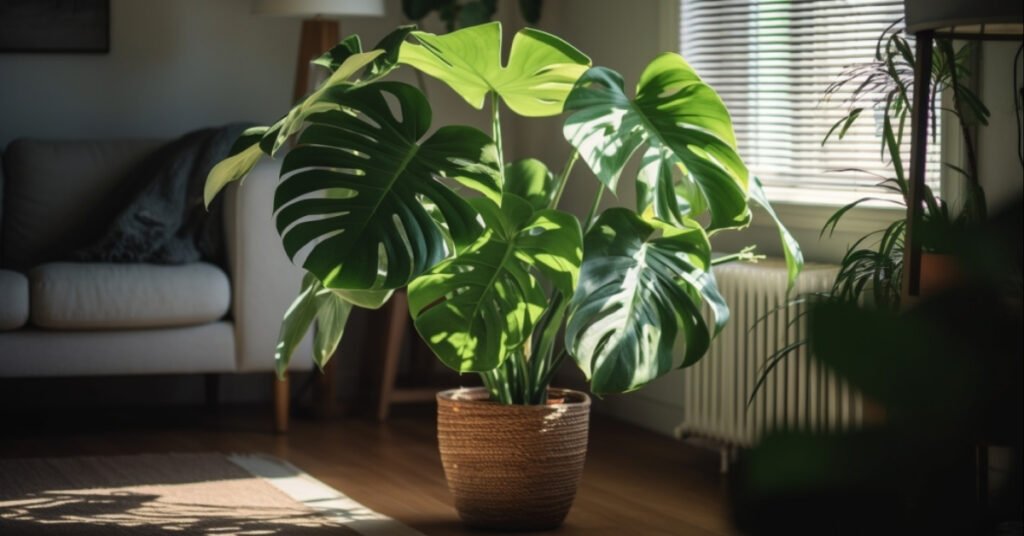
Monstera Plant Quick Facts
| Feature | Details |
|---|---|
| Common Name | Monstera Plant, Swiss Cheese Plant, Split-Leaf Philodendron |
| Botanical Name | Monstera deliciosa |
| Family | Araceae (Arum Family) |
| Plant Type | Evergreen tropical perennial vine |
| Life Cycle | Perennial |
| USDA Hardiness Zones | 10–12 (grown outdoors); commonly grown as a houseplant in colder regions |
| Mature Size | 10–20 ft. tall and 3–8 ft. wide indoors; up to 60–70 ft. tall in its native habitat when climbing trees |
| Sun Requirements | Bright indirect light to partial shade |
| Soil Requirements | Rich, well-draining, slightly acidic soil (pH 5.5–7.0) |
| Water Needs | Moderate; water when the top 2–3 inches of soil become dry |
| Benefits | Attractive foliage, air purification, easy care, indoor tropical appeal, long-lived houseplant |
| Landscaping Uses | Indoor specimen plant, tropical gardens, patio containers, greenhouse displays, climbing feature plant |
| Toxicity | Toxic to cats, dogs, and humans if ingested due to insoluble calcium oxalate crystals |
| Special Features | Iconic split leaves, aerial roots, fast growth, climbing habit, large architectural foliage |
| Resilience | Moderately resilient; tolerates occasional drought, low light, and indoor conditions better than many tropical plants |
Key Takeaways
- Monstera (Monstera deliciosa) is a popular tropical houseplant appreciated for its large split leaves and easy care.
- For optimal leaf growth and healthy growth, give your Monstera bright, indirect light and well-draining soil.
- Water when the top 2 to 3 inches of soil feel dry and do not overwater as root rot may occur.
- A moss pole or some other support will promote larger leaves and a more natural climbing habit.
- Monstera is easy to propagate from stem cuttings, making growing your collection simple.
- All parts of the plant are poisonous if ingested. Keep monstera away from pets and young children.
Table of Contents
Plant Overview
Monstera (Monstera deliciosa) is one of those houseplants pretty much everyone recognizes. Its large, glossy, characteristically split leaves add a dramatic tropical accent to homes, offices and gardens in warm climates. It is no wonder that Monstera has remained a staple for plant lovers for decades.
Native to the rainforests of southern Mexico and Central America, Monstera is a climbing vine that attaches itself to trees with aerial roots. It can grow quite large in the wild but is much more manageable indoors and still makes an impressive statement.
Monstera’s unique leaves are what really makes it stand out. Young plants have solid, heart-shaped leaves but as they mature the leaves develop the natural holes and splits that have earned the plant the nickname “Swiss Cheese Plant.”
Many gardeners grow Monstera for the appearance of a tropical jungle plant, without the need for constant attention. It grows well indoors, grows at a steady pace, and can become a beautiful feature with the right care. Monstera is a plant you can’t go wrong with, whether you’re a houseplant beginner or already have a budding collection.
Types and Varieties
The Monstera plant has become so popular because of the variety of shapes, sizes and leaf patterns that are available. Monstera deliciosa is the most commonly grown, but other Monsteras are great additions to home gardens and indoor settings. Some were prized for their giant split leaves, others for their unique variegation or compact growth. If you’re choosing your first Monstera or expanding your collection, here are some of the best varieties to consider.
Monstera deliciosa
The classic Monstera, and the variety most people think of when they hear the name “Swiss Cheese Plant.”
- With age it develops large glossy leaves with dramatic splits and fenestrations.
- Grows fairly fast with bright indirect light and a climbing support.
- Will grow 6-10′ tall indoors making it a great statement plant.
- More forgiving of the occasional watering mistakes than many other tropical houseplants.
- An excellent choice for beginners who want a large, low-maintenance tropical plant.
Monstera deliciosa ‘Thai Constellation’
A beautiful, variegated form with creamy-white speckled foliage.
- Every leaf makes its own special pattern, like stars scattered through the night sky.
- Less chlorophyll so grows slower than standard monstera deliciosa.
- Needs bright indirect light to keep the variegation strong.
- Makes a great focal point in living rooms, offices, and plant collections.
- Generally, more stable and predictable variegation than Monstera Albo.
Monstera deliciosa ‘Albo Variegata’
Very popular collector’s plant with striking white and green leaves.
- Has bold patches of white variegation which can cover large portions of each leaf
- Each plant is different and no two leaves are alike.
- Requires better light than green Monsteras for healthy growth.
- Often it’s a premium price tag due to limited availability and the difficulties of propagation.
- This is best for gardeners who already have some houseplant experience.
Monstera adansonii
This species is often called the Swiss Cheese Vine and offers a different look than Monstera deliciosa.
- Creates smaller leaves with natural holes rather than deep splits.
- Good in hanging baskets and shelves or climbing up a moss pole.
- Faster growing and more compact than Monstera deliciosa.
- Suitable for apartments and smaller indoor spaces.
- A great choice if you love the look of the Monstera but don’t have room for a big plant.
Monstera dubia
One of the more unusual of the Monstera species grown by houseplant aficionados.
- The young leaves are pressed to a support, giving a unique shingle-like look.
- As it climbs and ages, it matures into larger leaves.
- Like a moss pole, wooden board or similar vertical support structure.
- Provides texture and interest to indoor plant displays.
- Good for collectors tired of the same old Monsteras.
Plant Identification
If you need to identify a Monstera plant, the most obvious characteristic to look for are the large, shiny leaves with natural splits and holes. As the plant grows, these special holes in the leaves become more pronounced, giving Monstera its iconic tropical look. Here’s How to Identify a Monstera Plant.
| Feature | Description |
|---|---|
| Leaves | Large, ovate to heart-shaped leaves with a glossy dark green surface. Young leaves are typically solid, while mature leaves get deep splits and natural holes (fenestrations). |
| Stems | Thick green climbing stems, more robust with age. New leaves and aerial roots grow from the nodes along the stem. |
| Roots | Grows roots below ground and roots in air. Aerial roots assist the plant in climbing trees, moss poles, and other supports, while absorbing moisture from the air. |
| Rhizomes/Bulbs | Nil. Monstera grows from stems and roots, not rhizomes, bulbs, tubers or corms. |
| Growth Habit | Evergreen climbing vine, vigorous growth rate. Climbs upward naturally when provided with a support structure. |
| Mature Appearance | Appearance Develops into a lush tropical specimen with large, split leaves, thick stems and prominent aerial roots. Indoor plants generally grow to between 6 and 10 feet, but outdoor plants can be much larger in tropical climates. |
Planting
It’s pretty easy to get your Monstera off to a good start. This tropical plant is most often grown indoors but can be grown outdoors year-round in frost-free climates. Choosing the right location and planting it right will help your Monstera grow bigger leaves, stronger roots and healthier growth.
When to Plant
You can grow or repot a Monstera any time of year indoors, but spring and early summer are usually the best times. Longer, brighter days and warmer temps bring on faster root growth and new growth.
Plant outdoors after the last chance of frost and when the weather reliably stays warm in USDA Zones 10–12.
Where to Plant
Select a position that gets bright, indirect light. Too much direct sun will burn the leaves and very low light may slow growth and reduce leaf splitting.
If your Monstera is a houseplant, put it near an east or north window, or a few feet back from a bright south or west window. Find an outdoor spot that gets some shade or filtered sun, as one might find under a rainforest canopy.
A well-draining potting mix with plenty of organic matter is a must. Be sure your containers have drainage holes to prevent root rot.
How to Plant
- Buy a pot that is 1-2 inches larger than the current root ball with good drainage.
- Fill the pot with a chunky, well-draining potting mix for aroids or houseplants.
- Plant the Monstera at the same depth it was growing.
- Fill in around the roots and gently pat the soil to eliminate large air pockets.
- Water well until excess water drains from the bottom of the pot.
- Place the plant in bright, indirect light and allow the soil to dry slightly between waterings.
- If you want the plant to climb and get bigger leaves as it matures, add a moss pole or strong support.
Growing Requirements
Monsteras need bright indirect light. It is a mimic of the filtered sun light it receives under the canopy of the rain forest in its native habitat.
Sunlight
Monsteras need bright indirect light. It is a mimic of the filtered sun light it receives under the canopy of the rain forest in its native habitat.
- Position your plant near a bright window with filtered light.
- Usually a few hours of gentle morning sun is fine.
- Do not expose to hot afternoon sun as it can burn the leaves.
- Low light won’t kill the plant, but growth can slow down, and the leaves may not have as many splits.
Soil
A loose, well-draining soil mix helps keep the roots from rotting and lets the roots get air.
- Use a good quality aroid or houseplant potting mix.
- To improve drainage, mix in materials such as perlite, orchid bark, or coco coir.
- Soil should be slightly acidic to neutral with a pH of 5.5 to 7.0.
- Always use pots with holes in the bottom.
Water
Monstera likes soil that is evenly moist but does not like sitting in water.
- Water when the top 2 to 3 inches of soil is dry.
- As growth slows, reduce watering in fall and winter.
- Water and empty saucers to prevent soggy roots.
- Yellow leaves are often a sign of too much water. Dry, crispy edges may indicate not enough water.
Temperature and Humidity
Monstera is a tropical plant and thrives in warm, humid conditions.
- Maintain 65°F to 85°F (18°C–29°C).
- Keep away from temperatures below 50°F (10°C).
- Average household humidity is generally fine, but increased humidity promotes larger leaves and healthier growth.
- Don’t put plants next to cold drafts, heating vents or air conditioners.
Nutrition Requirements
Regular feeding encourages Monstera to produce vigorous growth and lush foliage.
- Fertilize every 4-6 weeks during spring and summer with a balanced liquid houseplant fertilizer.
- Cut back or cease fertilizing during winter as growth is naturally slowed.
- Over-fertilizing can cause salt build-up and root damage, so be careful.
- If growth appears slow, it is better to replace the potting mix or repot than to add more fertilizer.
When you meet these growing requirements, you will have a Monstera with stronger stems, healthier roots and the large split leaves that make this plant so popular.
Plant Care
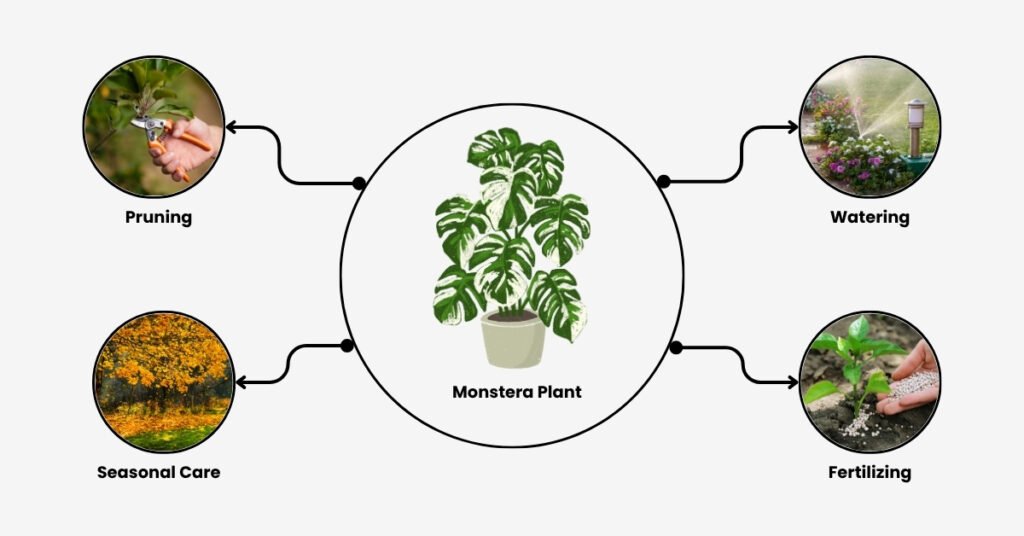
Once established, Monstera is a very low maintenance plant. Most care involves keeping it evenly moist, feeding it occasionally and managing its growth. With regular care, your plant will be healthy and will produce larger, more attractive leaves.
Watering
Monstera prefers its soil to be a little moist but not constantly wet.
- When the top 2–3 inches of soil feel dry, water the plants.
- Growth slows in winter, so you can water less.
- Always allow excess water to run off.
- Do not leave the pot in standing water, which can lead to root rot.
Fertilizing
Frequent feeding promotes healthy foliage and steady growth.
- Feed every 4 to 6 weeks in spring and summer with a balanced liquid houseplant fertilizer.
- Apply fertilizer at one-half to full strength as directed on the product label.
- Stop or slow feeding in the fall and winter.
- Occasionally flush the soil to prevent the buildup of fertilizer salts.
Mulching
Usually, indoor Monsteras don’t need to be mulched, but outdoor ones can benefit from it.
- Use 2 to 3 inches of organic mulch around outdoor plants.
- Keep mulch several inches away from the stem to prevent rotting.
- Mulch helps keep the moisture in the soil and moderates the soil temperature.
Pruning
Pruning helps control size and encourages healthy growth.
- Remove yellow, damaged or aging leaves as needed.
- Prune back overlong stems to maintain the desired shape.
- With clean, sharp pruning shears, cut just above a node.
- Gather healthy stem cuttings for propagation.
Companion Plants
Monstera works well with plants that enjoy similar conditions when you are making an indoor tropical display.
- Philodendron
- Pothos
- Peace Lily
- Bird of Paradise
- ZZ Plant
- Calathea
- Snake Plant
Seasonal Care
| Season | Care Tasks |
|---|---|
| Spring | Resume regular watering and fertilizing as growth accelerates. Repot any plants that are root bound and add or improve moss poles as needed. |
| Summer | Check the soil moisture and water as needed. Feed regularly and shield the leaves from the strong afternoon sun. |
| Fall | Slow watering and fertilizer applications as growth slows. Remove any damaged or aging foliage. |
| Winter | Water less often, stop fertilizing, and keep the plant away from cold drafts, heaters and air-conditioning vents. Keep humidity up if indoor air is dry. |
Propagation
It’s pretty easy to propagate if you want more monsteras. Most gardeners propagate Monsteras from stem cuttings, which root easily if kept warm, moist and in bright indirect light.
Stem Cuttings
Monstera is easiest and most reliably propagated with stem cuttings.
- Choose a healthy stem with at least one node and one leaf.
- Cut cleanly just below the joint.
- Place the cutting in water or a moist potting mixture.
- Keep it in bright, indirect light and keep it consistently moist.
- Once the roots are well developed, transplant the cutting into a container with good-draining potting soil.
Air Layering
Air layering is another effective method, especially on large, mature plants.
- Select a healthy stem with a node and an aerial root visible on it.
- Wrap the node in damp sphagnum moss.
- Cover the moss with plastic wrap to lock in the moisture.
- When roots are established, cut below the rooted section and pot up separately.
Pros and Cons of Monstera Plant
| Pros | Cons |
|---|---|
| Easy to grow and beginner-friendly | Toxic to pets and people if ingested |
| Large, attractive tropical foliage | Can outgrow small spaces over time |
| Adapts well to indoor conditions | Needs bright indirect light for best growth |
| Easy to propagate from stem cuttings | May require a moss pole or support as it matures |
| Available in many beautiful varieties | Susceptible to root rot if overwatered |
| Long-lived and rewarding to grow | Variegated varieties can be expensive |
Problems and Toxicity
Monstera is generally a tough plant, but it can develop problems if conditions aren’t ideal for its growth. The majority of problems are watering, light levels, humidity or common house plant pests. It is far easier to solve problems when they are caught early.
Common Pests
Like any houseplant, Monstera is susceptible to a few common pests.
- Spider mites – Common in dry indoor environments. Leaves become speckled and webbing is visible.
- Mealybugs – Produce white cottony masses on stems and leaf joints.
- Scale insects – Cling to stems and leaves, feeding on plant sap.
- Thrips – Leaf damage, distorted growth and silvery streaks.
Common Diseases
Most Monstera diseases are related to excess moisture and poor air circulation.
- Root rot – usually due to over-watering, or poorly draining soil.
- Leaf spot – May appear as brown or black spots on the leaves.
- Stem rot – May develop when stems are wet for a long period.
Environmental Problems
You don’t need to have pests or diseases to have Monstera problems. Often it is environmental stress that is the cause.
- Yellow leaves can indicate overwatering.
- Low humidity or inconsistent watering can cause brown edges on leaves.
- Low light often results in the formation of small leaves with few splits.
- If the leaves are drooping, the plant is either too dry or too wet.
- Slow growth is normal in winter or in insufficient light.
Troubleshooting Guide
| Problem | Likely Cause | Solution |
|---|---|---|
| Yellow leaves | Overwatering or poor drainage | Allow soil to dry slightly and improve drainage |
| Brown leaf tips or edges | Low humidity, underwatering, or salt buildup | Increase humidity, water consistently, and flush soil occasionally |
| Drooping leaves | Underwatering, overwatering, or temperature stress | Check soil moisture and maintain stable temperatures |
| Root rot | Waterlogged soil | Remove affected roots and repot in fresh, well-draining soil |
| Small leaves with few splits | Insufficient light | Move the plant to a brighter location with indirect light |
| Pale or weak growth | Nutrient deficiency or low light | Fertilize during the growing season and improve lighting |
| Sticky leaves | Scale insects or mealybugs | Remove pests and treat with insecticidal soap or neem oil |
| Fine webbing on leaves | Spider mites | Increase humidity and treat with insecticidal soap |
Toxicity
The Monstera has insoluble calcium oxalate crystals that are toxic when chewed or ingested.
- Toxic to dogs, cats, and horses.
- Can cause irritation in the mouth, drooling, swelling and difficulty swallowing.
- Keep your plants away from inquisitive pets and small children.
- If swallowed, call your veterinarian or poison control center.
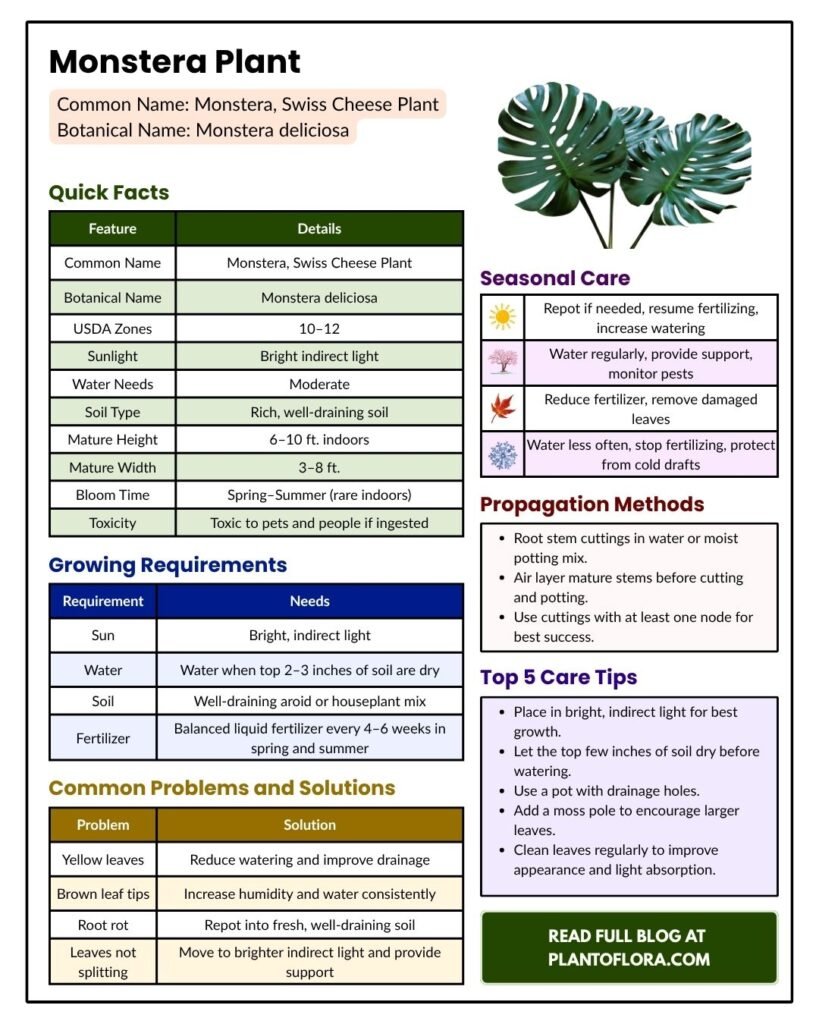
Frequently Asked Questions
Is Monstera an outdoor or indoor plant?
Monstera is a primarily an indoor plant, though in USDA Zones 10–12 it can be grown outdoors year-round, where temperatures stay warm.
How often do you water a Monstera plant?
Water your Monstera when the top 2-3 inches of soil are dry. Do not keep the soil constantly wet, which can cause root rot.
Why aren’t my Monstera leaves splitting?
As the plant gets older, leaf splits often develop. The most common reasons for leaves being solid are lack of light, no support or a young plant.
Do Monsteras need moss poles?
A moss pole is not a must, but it helps Monstera climb naturally. Supported plants often have larger leaves and more vigorous growth.
Is Monstera poisonous to pets?
Yes. Monstera contains calcium oxalate crystals, which can irritate the mouth and digestive system of cats, dogs and people if eaten.
How quickly does a Monstera grow?
Monstera is a fast to moderate grower. With bright indirect light, regular watering and proper care, it can produce several new leaves each growing season.